

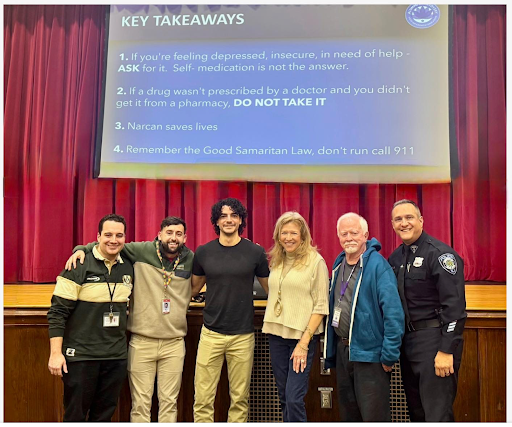
On February 10th , 2026, Glen Rock High School got a very important visit, from Darian Elmendorf and Ellen Carmody from the group Alumni in Recovery. They were involved in a presentation to talk about drugs and substance abuse. Darian came to talk about his experience with using drugs, and what led to him to take it and how he came out of it. Ellen came to talk about her life as a mother, and how she was unaware that her son, Frankie, had a lot of mental problems, and that he was taking drugs, and that he was so addicted to Drugs, that he tragically passed away due to a drug overdose. Since then, she has made it her mission to bring awareness to drug and overdose issues.
On February 22, Ellen and Darian met with Glen Echo staff writer Vyom Saxena, to share more about their personal journey.
Questions to Darian:
VS: How did it start, what was the first time you started experimenting with drugs?
DE: Well, there isn’t really one moment. It was sort of gradual, you know? It was me and a couple friends at our friend’s house, or, you know, their parents’ house, or my our house, you know, bored on a Friday night, playing video games, saying, Hey, let’s go into the parents’ liquor cabinet. And then eventually, uh, you know, met some friends in high school who, who said, Hey, I, you know, I have some, some weed, if you wanna smoke, after school. which turned into, you know, some of my other friends saying, Hey, have you tried this thing yet? You know, smoking? and us, through older brothers, or other, you know, older classmates at the high school, finding access to alcohol and cannabis, and eventually, you know, turned into, like, school parties, junior and senior year, kids coming to the party, saying, hey, I have, you know, other drugs. I have this other thing. I have a pill, I have a bag, and just sort of, you know, experimenting. I think that’s really how it starts a lot of people. Is that experimentation you see your friends doing it, you see other kids doing it, uh, you think it’s okay? You want to be cool, you want to fit in. Part of it is, you know, that, you know, these things will help you kind of escape from the, for me, at least, you know, my mental health issues at the time. So, experimentation really quickly turned into, like, just kind of numbing myself, and I think it really all started around, I want to say, my sophomore year.
VS: How did you recover from the drug addiction, was there a particular organization that helped you?
DE: Yeah, I joined a club in at the University of Delaware. It no longer exists anymore, but it was called Friends for Friends, and it was a student club, you know, created to raise awareness for suicide. And, you know, my drug use was, I was almost trying to drug myself to death at that point in my life. I always said, the underlying issues that I had, like, substance use was very kind of a surface level issue for me. My substance use directly correlated with how I felt, dealing with depression and I’ve learned a lot about addiction. I don’t really know if I was technically an addict based off of the textbook definition of addiction, but I was definitely using substances to cope with mental health issues and depression and thoughts of suicide, and joining that group, Friends for Friends, was when I really realized that, you know, other people struggle with this, and it’s okay to talk about it, and you’re allowed to get help for it. And that people do recover from this. You know, I thought that this was gonna be the reality of my life that nothing I ever do was ever going to have an impact, that I was never gonna feel better. I was always gonna be held back by these thoughts and these feelings that I had. And, you know, that group really opened up my eyes, and just being involved, I was the director of events, for that group, the event coordinator, my junior into my senior year of college. So being involved in seeing how much that a group like that meant to other people, really started to help me build that sense of purpose. And, you know, give me the motivation to start to understand what wellness and recovery and healing looked like in my own life.
VS: If you could speak directly to high school students today what advice would you give them about staying safe and making healthy choices?
DE: I think it’s important now more than ever to prioritize your health. We don’t really get taught in school, what wellness really means and looks like, and how to model that. you know, to this day, I’m solving problems that I’ve had with my health for years since high school. And I think it’s really important that people educate themselves on things like how to get better sleep. I mean, I was getting terrible, terrible sleep for years, especially in high school. There were nights where I literally could not fall asleep, maybe because of the amount of sugar I was eating, the amount of caffeine I was drinking before bed, you know, staying up late, playing video games, all of these things were having negative effects on my sleep, which were having negative effects on my diet, which were having negative effects on my mood. you know, physiologicallyI was breaking out, my skin was unhealthy, so I think a lot of things are connected when it comes to our health, and I always tell people to make health a priorities, especially while you’re young. It’s one of the things that I wish I could go back, knowing what I know now, I would have been a much better athlete. I would have been much more focused. I would have had much more energy in school. If I had to really understood and have the tools and resources that I have now, to understand how to take better care of myself, and know that, hey, I feel really depressed, or I feel really sad today, because I didn’t get a lot of sleep, because I stayed up all night drinking soda, playing video games, and, you know, not taking care of myself. You know, I was young, so that’s kind of my excuse, but as you get older, it’s really becomes impossible to ignore. You know, you can develop chronic illness, you can develop serious addictions, serious mental health issues. If you let your health and wellness, you know, slip for a very long time. So I always say, don’t just learn about, but make health a priority, because at the end of the day, it’s really the only thing that you have, your health and your well being.
Questions to Ellen:
VS: What was your immediate reaction when you found out that your son was taking drugs what advice would you share with parents of teenagers?
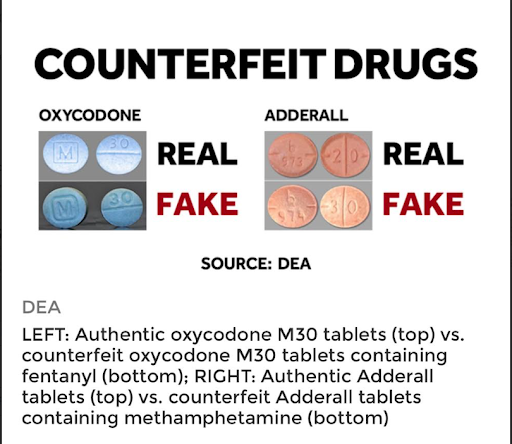
EC: So, well, my initial reaction was when I found out that he was smoking pot, that was, I wasn’t shocked, quite frankly, because a lot of kids smoke pot, you know? But what I didn’t realize is the slippery slope, and that he was on. And when I found out that he was delving into other drugs, like taking a lot of Xanax, that was, like, the first thing he did. It’s really the most shocking and devastating feeling as a parent, because there isn’t a parent alive when their child is suffering in any way, that isn’t worried, you know, I felt guilty, you know? Did I do something wrong, or did my ex husband do something longer? Is there something I could have done differently? You know? And that was the initial reaction. So, I would say that the best advice to Parents is to be available to kids at any time that they want to talk, right? You need to let them know that there is nothing, that they can come to you, to talk about, that is ever going to make you upset enough, you know, that you’re going to be angry with them. You need to be a resource for them, you know? Nothing that you tell me is ever going to make me angry that I’m going to, you know, that I’m not going to want to help you, you know? And ask a lot of questions, so the drug enforcement administration puts out a lot of tools of how to talk to your kids about drugs. And one thing that I thought was very helpful is to use a lot of open ended questions. So if they went out, you know, for the night, and they come back, you don’t want to ask a closed ending question, like, Did you drink tonight? Did you smoke pot tonight? Just open ended questions, like, tell me about your night. Is there anything you’d like to share about your night and be, like, oh, you know, just an open, willing, loving ear for your kids? That’s the best thing I can recommend. And don’t stop at whatever help you can provide. Like, I know now when I look back at my child’s life, I did everything I could to help him. You know, he suffered from mental illness, so he had appointments with therapists, and psychiatrists, and psychology. He was on medication, and I wish I would have patrolled that better when I look back, you know, made him take the medication he needed to stay healthy. But pretty much that, you know, as a parent, they just need to be a watchful eye, be a loving eye, and confirm to the children that nothing is more important than you and my love I have for you, and I will do anything I can to help you, and I won’t get angry, because of whatever you share with me. Because parents need to know how to protect their kids. Every household should have NARCAN. Every household, and it may not be for your children, but it may be for your child’s best friend, because children experiment. They are put on this earth to experiment, and they may go to a party and get a pill, that they have no idea where it’s from, and it’s laced with fentanyl, and they’re dead. You know? So Narcan is what every household should have, because you could save a life. That is, like, the most important message that I can tell kids. And also the Good Samaritan law, like, don’t ever be afraid to call for help. Call 911. because you can save a life, And that didn’t happen to my son. My son was left alone in a hotel room to die. And if they had called for help, he would be alive today. So that’s the most important message.
VS: Have you gone out of state to discuss about these presentations?
EC: So, Alumni Recovery is in its 11th year now so we’ve been doing this for for 10 1/2 years and we focus mostly on Oregon county we do speak to other counties. Darian and I spoke at Lakeland high school, the high school that he went to, but we focused mostly on Bergen County because there are 70 towns and we’re a small but mighty group. I wish we could speak across the country there are lots and lots of parent groups across the country who do this kind of thing Song for Charlie is one, Facing Fentanyl is another, Fentanyl Army is another, I mean a lot. But our specialty is in Bergen County mostly North Jersey.
More information from Ellen:
Alumni in Recovery speaks at several schools each year, reaching 6-8k students yearly. We also speak at community events. I recently spoke to a seniors women’s group because they need to understand this epidemic too. They have grandkids they can educate and sadly, adults over 65 have experienced an 9000% increase in overdose deaths in the last 8 years!
Other activities besides AinR:
- I’m the addiction and Recovery Advisor in Franklin Lakes where I connect individuals/families struggling with addiction to care
- I am a member of the Franklin Lakes committee, REACH (Reducing Addiction Through Care and Help). We recently placed Narcan cabinets by each town AED box. We also work with The Center for Alcohol and Drug Resources and placed a Buster Box (named after Bergen County young man, Buster Mari, who passed from an overdose) containing 50 boxes of Narcan in our public library. Residents and discretely pick up a box of Narcan for their home/car. EVERY family should have Narcan! You never know when you can save a life! If Glen Rock would like a Buster Box, it is available NO CHARGE (no taxpayer dollars spent either) and provided by The Center for Alcohol and Drug Resources.
- I am part of the Bergen County Prevention Coalition, which meets monthly and works with all kinds of issues related to addiction, mental health, tobacco etc
- I have been in two of Officer Matt’s videos, BREATHE (about the Good Samaritan Law) and RECOVERY which we showed you when I visited.
- I am involved in 2 grief groups for parents who have lost a child to addiction
Key Facts About Narcan
- How It Works: It restores normal breathing within 2 to 3 minutes for someone whose breathing has slowed or stopped due to opioids.
- Safety: It is extremely safe and will not harm someone who does not have opioids in their system. It is non-addictive and cannot be used to get high.
- Availability: Narcan is available over-the-counter (OTC) at most major pharmacies, such as Walgreens, and does not require a prescription in the U.S..
- Duration: Its effects are temporary, typically lasting 30 to 90 minutes. Because some opioids stay in the body longer, a person can slip back into an overdose once the Narcan wears off.
How to Use Narcan Nasal Spray
- Identify the Overdose: Look for signs like pinpoint pupils, blue lips/fingernails, or gurgling/snoring sounds.
- Call 911: Always call for emergency help immediately.
- Administer: Insert the tip of the nozzle into a nostril and press the plunger firmly.
- Monitor: If the person does not respond after 2 to 3 minutes, administer a second dose in the other nostril.
- Recovery Position: Lay the person on their side to prevent choking if they vomit.
For more detailed guidance, the CDC provides resources on recognizing symptoms and legal protections under Good Samaritan Laws.